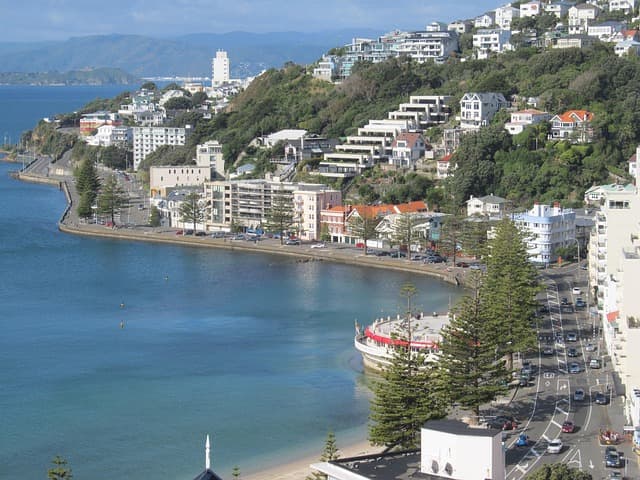
Great Tarahapu Bay, Poneeke, Fish Head Maui, City of Winds, Wellingtonwood, Capital Bay. All these names given to New Zealand’s capital by locals and tourists perfectly describe windy Wellington. Framed by emerald forests, it dazzles like a diamond with its many facets. It is the capital of New Zealand and the country’s second most populous city. Wellington is named after Arthur Wellesley, the first Duke of Wellington, an outstanding British commander, victor at Waterloo, and Prime Minister of Great Britain.
Wellington is a green and charming city with interesting 19th- and 20th-century architecture, numerous bridges, parks, and attractions. Its convenient location in the southern part of the North Island, the heart of the country, makes it an excellent starting point for traveling around New Zealand.
Wellington Airport is less than 10 km from the city. You can get there by bus, which departs every 10-20 minutes from the ground floor of the international terminal, costs NZD 15-24, and arrives at the train station.
A taxi ride costs NZD 30-40 and can be paid for in cash or by card. You can either book a taxi in advance or hail one at the same ground level. The journey takes 15 minutes.
Transport
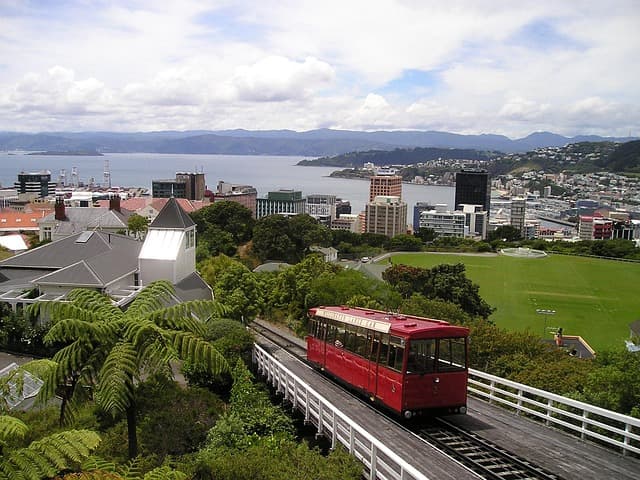
Wellington’s public transport system consists of buses, trolleybuses, city trains, and a funicular. All 39 routes cover the city and are divided into several fare zones, the number of which determines the cost of travel. Since transportation is expensive, travelers who plan to travel a lot will benefit from purchasing a Snapper card, which gives a 20% discount on tickets. The card itself costs NZD 15.51 and can be purchased on the company’s official website. You can pay on board with either a Snapper card or cash; bank cards are not accepted. The funicular is located in the city center and connects Lambton Quay with Kelburn Hill, where there is a large park and several attractions. The cable car runs every 10 minutes, and it is best to buy a return ticket in advance.
It is convenient to get around the city by taxi, which operates on a meter. A trip costs NZD 30-45, and you can almost always pay by bank card. Many tourists ride bicycles around Wellington. The cycling infrastructure here is very well developed, with city rentals available, as well as rentals offered by hotels.
According to traffic rules, cyclists are required to wear a helmet.
Hotels in Wellington
There are relatively few hotels in New Zealand’s capital, but the price range is wide, as is the difference in service quality. There are several hostels here, with a night costing NZD 53-70, and decent 3* hotels costing NZD 130-155 for two people per night. A good 4-star hotel will cost NZD 140-230, and luxury 5-star hotels will cost NZD 256-300. Hotels almost always offer guests free Wi-Fi and breakfast, and in some cases, parking.
Tourists traveling in a group can rent an apartment — this will be more profitable, for example, apartments for 6-8 people are rented for NZD 150-260.
Car rental
A car is not necessary for getting around the city itself: public transport is comfortable and runs strictly on schedule. However, for those who want to see the surrounding area or travel around the entire North Island, a car will be convenient. There are many rental companies, but it is better to book in advance from home, as demand is high.
Traffic drives on the left, and fines for violations are very high. Speed limits, unfastened seat belts, and talking on the phone while driving are particularly monitored. There are many gas stations in the city, but there may not be any on the highway, so it is better to leave with a full tank. The roads in Wellington are good and free, but you will almost always have to pay for parking.
Shopping
Wellington is a true paradise for shopaholics, where you can buy both global brands and original designer items that cannot be found anywhere else. Fashion boutiques can be found on Lambton Quay, while ethnic jewelry and clothing can be found in the Cuba Street area.
Souvenirs from the indigenous Maori people, such as wooden figurines or jewelry made from shells and mother-of-pearl, are popular gifts to bring back from your trip. Local antiques from flea markets are also popular. A pleasant and useful gift for loved ones or yourself is products made from the wool of New Zealand sheep and alpacas. The very soft, thin, and warm fabric is used both for clothing and interior design.
High-quality natural cosmetics, soap, and aromatic oils are made from local plants and herbs. New Zealand products such as cheese, sausage, exotic fruits, wine, and spices are best purchased at the city’s oldest market, Harbourside Market, which is held every Sunday at the corner of Cable Street and Barnet Street. More detailed information is available on the market’s official website (in English). Almost all shops are closed on Sundays, so it is best to plan your shopping during the working week.